
"I Accuse Mr Amery"
What About Welfare for The Forgotten Army?

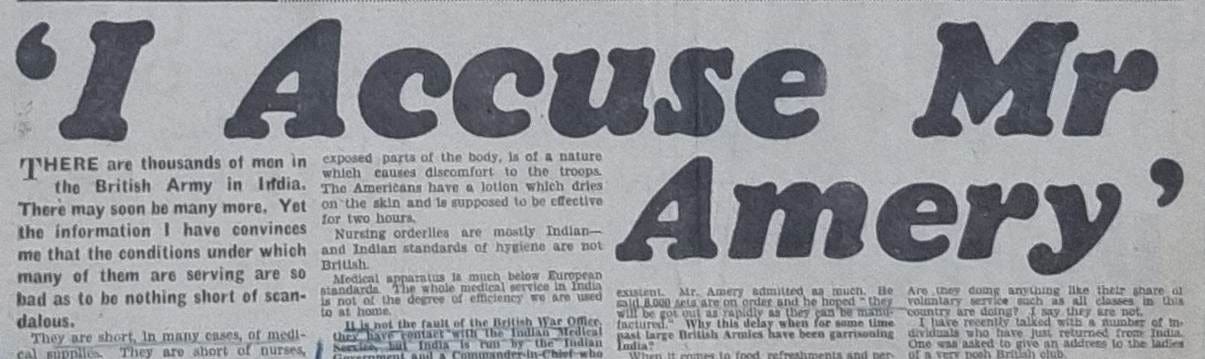
Sometimes, a provocative headline written by the right person at the right time can work wonders and get the bureaucratic gears working. One such timely prompt was written by Captain Bellenger MP (1894-1968) in the Sunday Pictorial on 6 August 1944 in his popular column Voice of the Services. Echoing Emile Zola’s assertion during the Dreyfus Affair, Bellenger took aim at Mr Leo Amery, Secretary of State for India, for not doing enough to look after the needs of the British troops stationed in the Far East. “I Accuse Mr Amery” began as a ripple of slight annoyance at the government but gathered pace, creating much bigger waves, raising questions in Parliament, and prompting urgent notes from Churchill to investigate. I trace the article’s impact through Cabinet and War Office papers found in The National Archive.
Send men overseas to fight for years at a time, and there’s a strong chance they will start to feel like they’ve been forgotten by those at home. The feeling of dislocation worsened if they didn’t think their welfare needs were as good as those of their comrades fighting elsewhere. This was a common theme of troop morale in ‘side-show’ theatres during the Second World War. Whilst men in Italy were beginning to form the lyrics of the D-Day Dodgers in the autumn of 1944, the forgotten Fourteenth Army in India and Burma were feeling equally disgruntled. At the time, Fleet Street was fully focused on the fighting in Normandy. Apart from the capture of Myitkyina by Stilwell’s Chinese divisions in early August, news from the Far East had been fairly thin since the earlier victories at Imphāl–Kohīma.
Bellenger felt that the time was right to raise the plight of our boys over there with the British public. He wrote:
“There are thousands of men in the British Army in India. There may soon be many more. Yet the information I have convinces me that the conditions under which many of them are serving are so bad as to be nothing short of scandalous.”
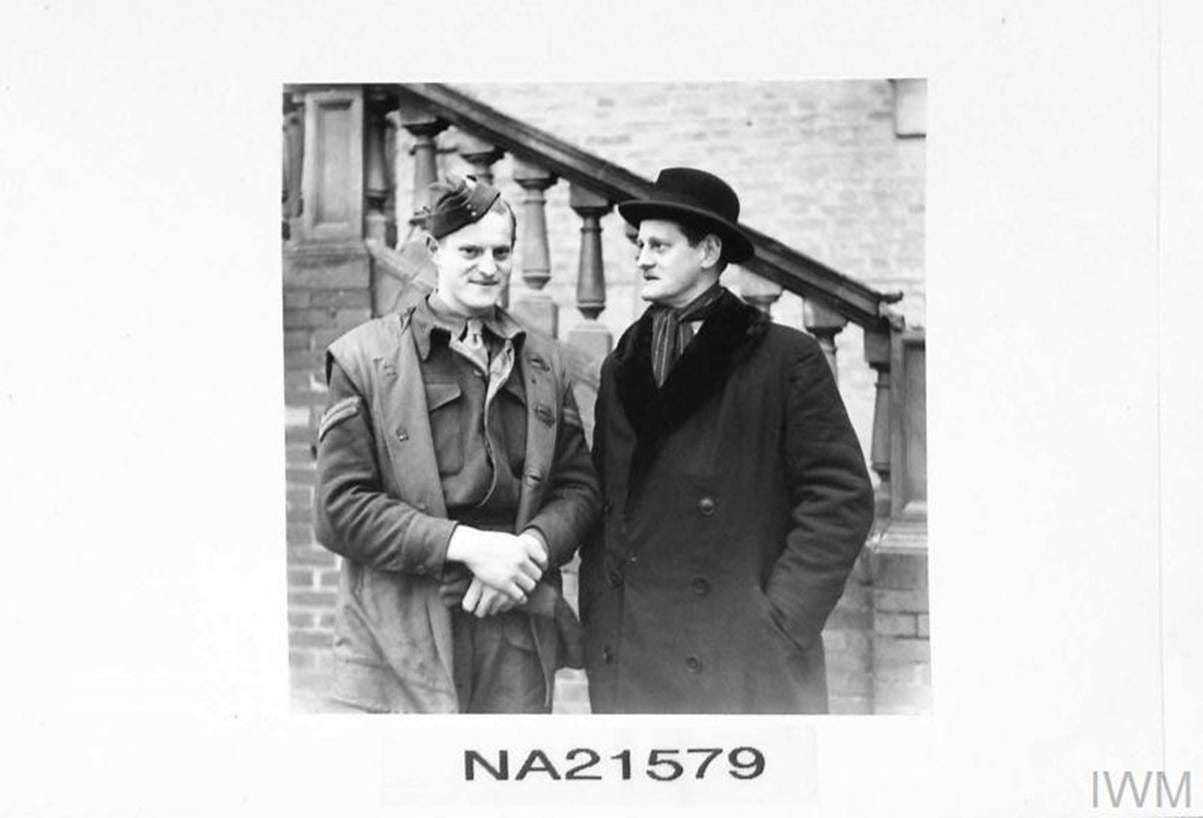
His article lists the servicemen’s hardships, focusing on the lack of welfare provision in India, particularly when compared with that enjoyed by British soldiers in Normandy and Italy, let alone against the gold standard expected by the American troops.
“Conditions are far different in the Far East. There, where the peril from tropical disease is at least as great as the peril from Japanese bullets, the medical service is starved of personnel and out-of-date in its equipment, with a result of avoidable death and a vast amount of unnecessary suffering. The soldier has nothing to read but dirty antiquated magazines, nothing is done for his entertainment. On leave, he is fleeced by native profiteers and snubbed by his high-and-mighty fellow-countrymen and fellow-countrywomen.”
He goes on to point out that the troops’ needs were being let down because welfare fell between two great bastions of bureaucracy. Whilst the British Parliament was responsible for sending servicemen out to the Far East, it was the Indian government that was responsible for their welfare once they were there.
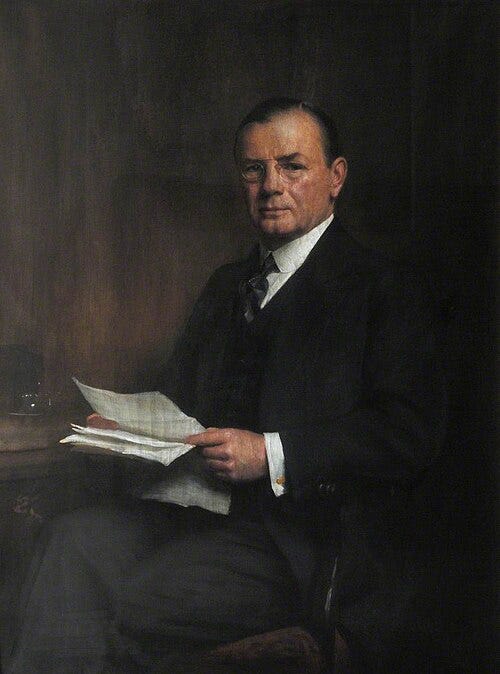
Blaming it all on Mr Amery was perhaps a bit unfair. There were plenty of challenges beyond bureaucracy that made delivering welfare difficult, not least the vast distances in the Sub-Continent, the heat, the disease, etc. On the other hand, organisations like the NAAFI did not operate in India due to existing spheres of administrative control.1 Bellenger used the article to also take aim at one of his favourite stool pigeons:
“As for ENSA, how many star artists have visited ‘this jewel in the British diadem?’ I doubt whether they are more than you can count on your fingers, Vera Lynn, Stainless Stephen and the Waters Sisters. Any more? I shall be pleased to hear of them.”
He had been critical of the organisation and the National Services Entertainment Board previously and was suspicious of the amount of money they spent in the name of troop welfare.2 The fact was that the lack of manpower in the Services made it very difficult for troops to entertain themselves, so civilian organisations such as ENSA played an important role at this stage of the war.
Bellenger’s article had put the proverbial cat among the pigeons and made a lot of people feel very uncomfortable reading it that Sunday morning. But it was going to get worse and the fallout didn’t take long to hit. Two days later after the article’s publication, Churchill’s Private Secretary, G.C.B. Dodds wrote a terse note to two of his colleagues:
“The Prime Minister has seen Captain Bellenger’s article “Our Men in India” in the Sunday Pictorial on August 6. He has asked for brief comments of the Secretaries of State for War and India.”3
Churchill wanted answers. With the European war expected to wind down, perhaps as soon as Christmas 1944, British troops were expected to be redeployed to fight Japan. Troops fighting in Italy were already fearful of being sent to the jungles of Burma, according to the CMF Morale Reports, and Bellenger’s article did not help. A flurry of internal memos and telegrams was generated in London and New Delhi to form a response. Damage limitation was the order of the day.
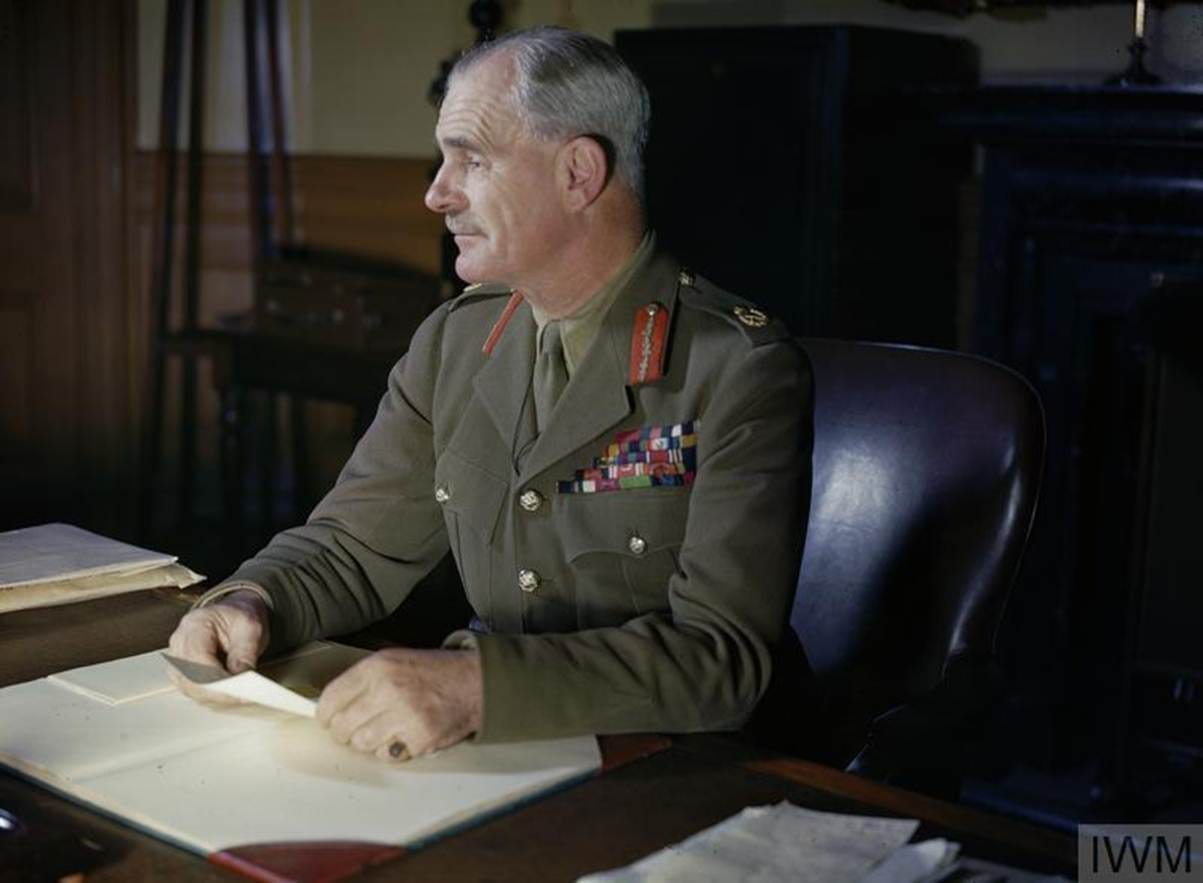
An internal telegram from Wavell at the Viceroy’s office in New Delhi to Leo Amery on 20 August stated that Bellenger’s accusations were ‘grossly exaggerated, but there is enough truth in them to make complete contradiction difficult.”4 This was turning into a ticklish business. The telegram went on to address each of the accusations in turn:
“Bellenger’s main complaints concerning medical services, prevention of malaria, apathy of Indian Government, lack of books and magazines, inadequate and expensiveness of canteens, and low standard of E.N.S.A. entertainments.”
The Viceroy rather weakly points out, “I do not think the canteen service is at all bad. I have seen several good E.N.S.A. shows, the troops were appreciative.” The telegram ends with the admission to Mr Amery:
“Until people at home can be brought to realise the distances involved, the shortage of shipping and transport, the climate, and very small numbers of British civilian personnel in India to help with amenities, I am afraid you will continue to have criticism of this type.”
So Bellenger had a point – the authorities knew the welfare of the British troops was below par in India. It was Mr Amery’s turn to send a formal memo on the Bellenger article to Mr Churchill on 24th August after he had spoken to Sir James Grigg (Secretary of State for War):
“Grigg and I feel that the proposed impending increase of British Forces in the Eastern theatre make it necessary to review the position on the broadest lines. The troops who will go to India will be men who have experienced the welfare arrangements in other theatres of war, and they will expect to find similar facilities in India which cannot be provided from indigenous resources and have not so far been provided there.”
Amery proposed to send the Earl of Munster to India “to examine at first hand the welfare organisation”, adding “It would also show the troops that we here are taking a positive interest in their conditions of service.”5 So Bellenger’s article had successfully drawn attention to a problem and set off a chain reaction at the highest levels. It is doubtful that Churchill would have picked up on the article if he had not been mulling over increasing troop numbers in South East Asia Command, but the timing of “I accuse Mr Amery” was just right.
I will look at the ongoing fallout from the article, Lord Munster’s report, and the practical steps taken to improve the welfare of British troops in India in my next post.
Harry Miller, Service to the Services The Story of the NAAFI, 1st edn (Newman Neame Limited, 1971), p. 56; Brigadier M.C. Morgan, C.B.E., M.C., p.s.c., ‘WO 277/4 Army Welfare 1939-1945’, TNA [The National Archives], The War Office, 1953, p. 117
Letter to Sunday Pictorial by Captain F.J. Bellenger, MP, 17 May 1942. ‘T 161/1457 Treasury: Supply Department Registered Files (S Series)’, TNA [The National Archives], n.d., fol. 2.
Letter from Dodds to McGregor, 8 August 1944. ‘WO 32/11194 Morale General (Code 105(A)) InterServices Committee’, TNA [The National Archives], n.d., fol. 2.
Telegram from Viceroy to Secretary of State for India, 20 August 1944. ‘WO 32/11195 : This File Was Originally Catalogued under More than One Subject Heading. These Headings, and Details of This File, Are as Follows: PUBLICATIONS: General (Code 24(A)): Inter-Services Committee on Morale. MORALE: General (Code 105(A)): Inter-Service Committ’, TNA [The National Archives], n.d.
Memo from Amery to Churchill, 24 August 1944. ‘WO 32/11195 : This File Was Originally Catalogued under More than One Subject Heading.’